The first properly cold morning has a smell to it. The heating clicks on, the windows fog at the corners, and the kettle quietly becomes the hardest-working object in the kitchen. Autumn and winter ask more of a tea station than summer ever does: more refills, more steam, more damp wool left on the counter. The good news is that the two pieces doing most of that work — the kettle and the tea cosy — are also the easiest things in the room to restyle.
Warmth Is a Material Question
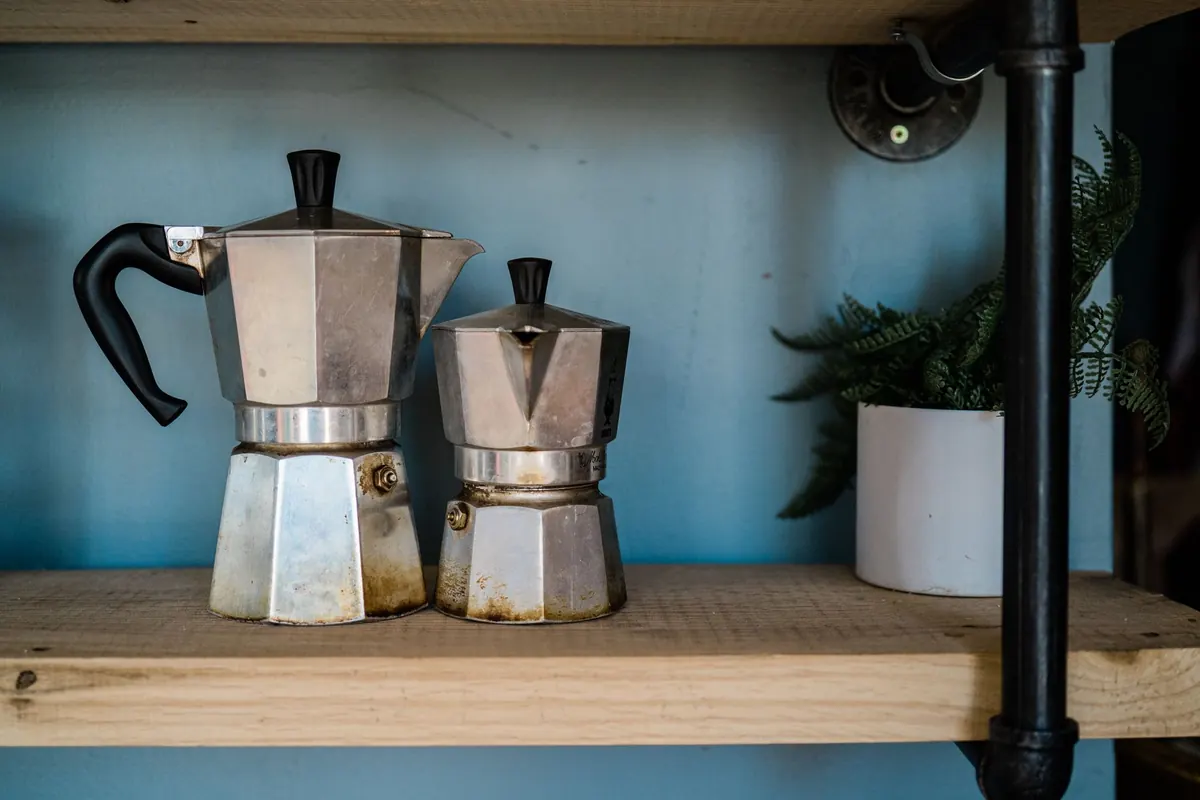
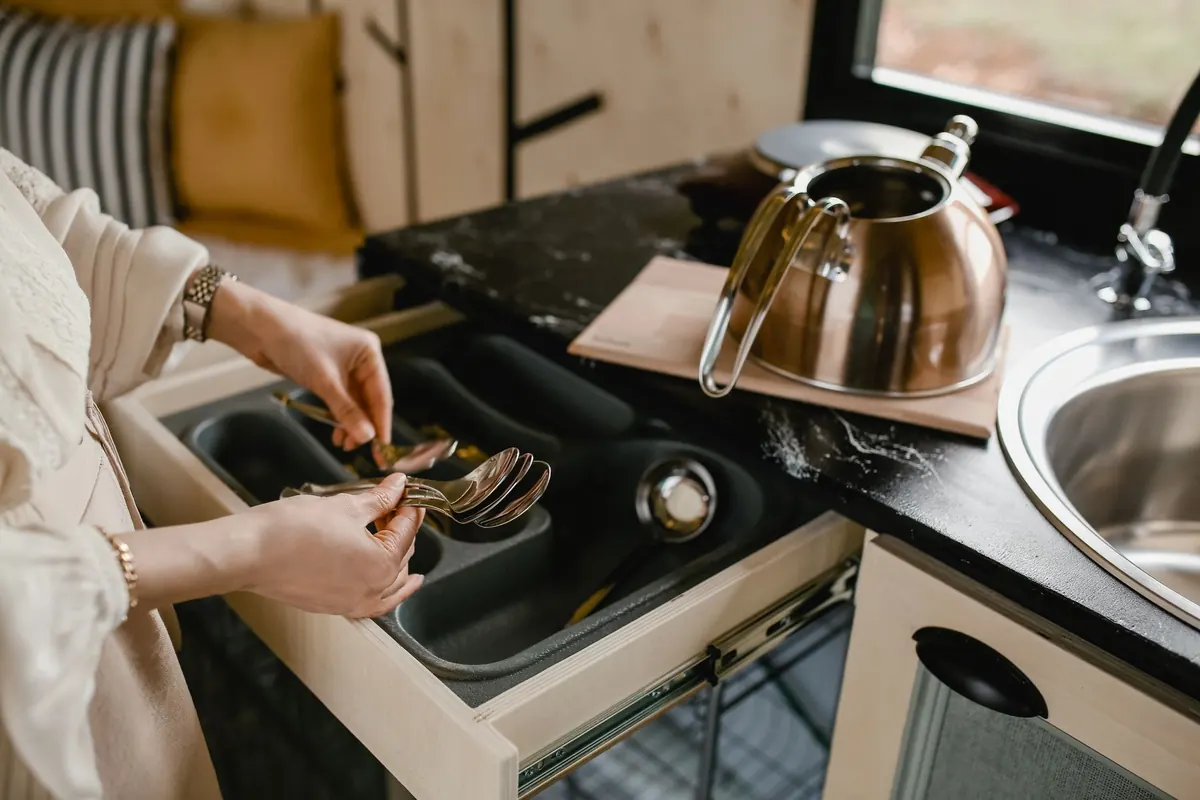
Texture changes how a kitchen feels faster than anything else you can adjust. A glossy white kettle on a white worktop looks crisp in July and clinical in November. Swap in copper, matte enamel, brushed brass or a stoneware pot with a wooden handle and the same corner of the counter suddenly reads as cosy.
The same logic applies to the cosy. Chunky lambswool, felted wool, quilted cotton with a thermal lining, waxed canvas, boiled wool with visible mending — all of these say winter. Thin acrylic knits say nothing much, and they also insulate less, which matters when the pot needs to stay hot through a second cup.
You do not need to replace everything. One warm-textured element next to two cool ones is usually enough. A felted wool cosy on a stainless pot, or a copper kettle beside a plain ceramic mug stack, gives the eye somewhere soft to land.
Colour: Borrow From the Season's Larder
Cold-month palettes work best when they come from food rather than from a paint chart. Think quince, damson, chestnut, moss, oatmeal, oxblood, ink blue and the deep amber of a good marmalade. These colours look expensive together because they already sit in the same family.
The practical rule is one rich colour, two neutrals. A burnt orange cosy on oatmeal stoneware with a cream linen cloth works. So does a deep plum cosy with brass fittings and a charcoal tray. What usually fails is a counter covered in six competing brights — it reads as clutter rather than as warmth.
Working with a kitchen you already have
If your cabinets are grey or your splashback is cool white, do not fight it. Lean into the contrast and let the tea station carry the season instead: a toasted ochre kettle, a cream cosy with a ticking stripe, a small jug of dried stems. If your kitchen is already warm — wood, terracotta, cream — keep the kettle quieter in matte black or aged steel and let the cosy bring the colour.
The Cold-Month Tea Station
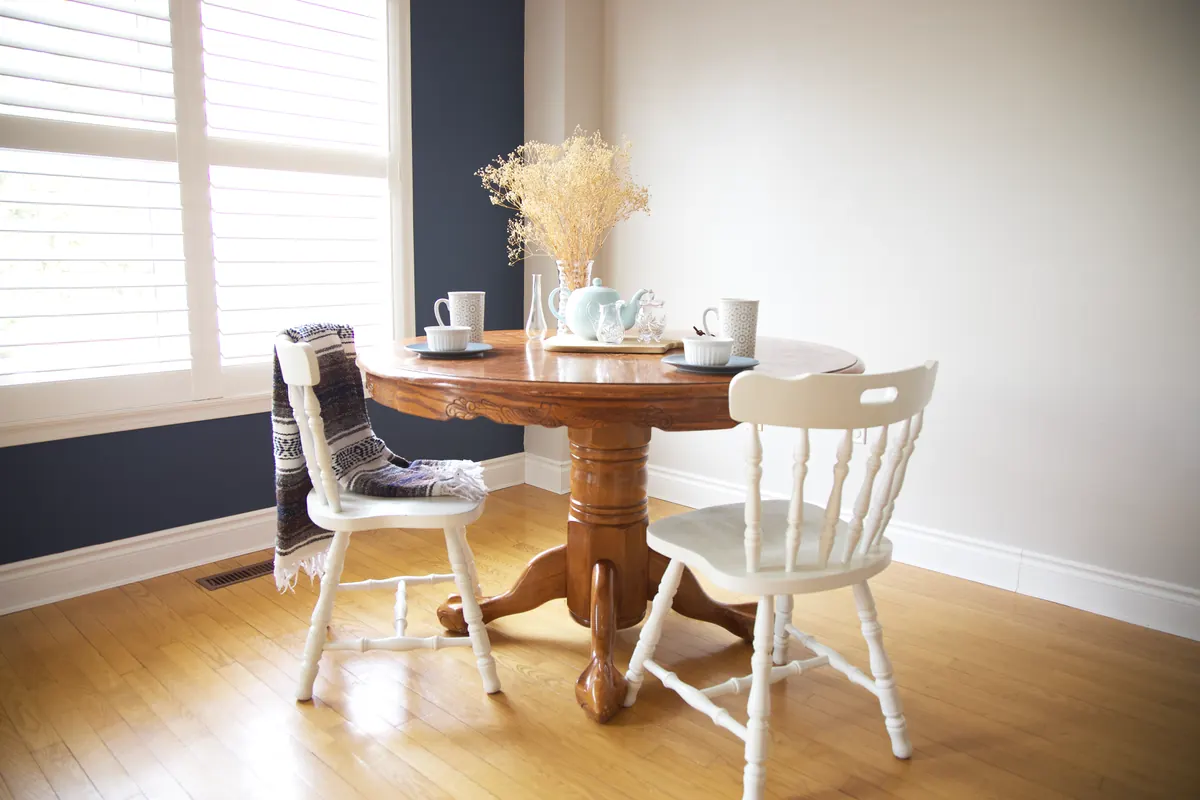
A tea station is not a shelf of equipment. It is a small, self-contained ritual zone that stays set up from October to March, so nobody has to hunt for the strainer with the kettle already boiling.
- A tray or wooden board to hold everything. This is the single most useful piece; it keeps the arrangement looking deliberate and lets you lift the whole thing away for cleaning.
- The kettle, positioned so you can fill it without walking more than a step or two from the sink.
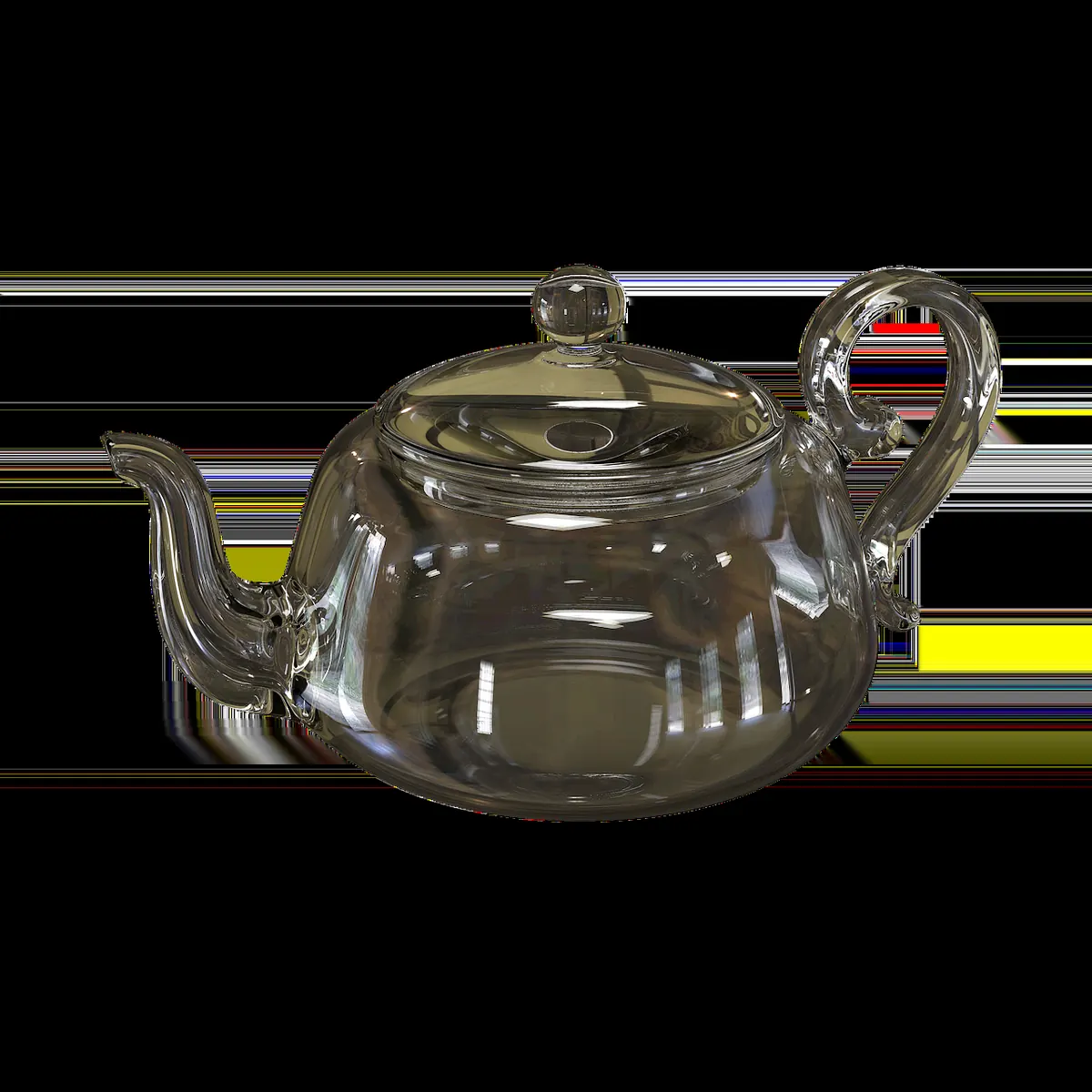
- Two teapots at most — one everyday pot that takes the cosy, one smaller pot for a single strong cup.
- A lidded tin of loose leaf plus a simple strainer, or a small caddy of bags if that is what actually gets used.
- A spoon rest or small dish, so wet spoons stop leaving rings on the wood.
- A cloth in linen or waffle cotton, folded rather than crumpled.
- One decorative object: a candle, a tiny vase of dried seed heads, a bowl of walnuts, a stack of two favourite mugs.
Keep the whole arrangement within arm's reach of the kettle. If you have to cross the kitchen to reach the sugar, the ritual breaks and the clutter spreads.
Choosing a Tea Cosy That Earns Its Place
Fit
A cosy should sit snugly over the pot with the spout and handle still accessible, and it should reach down far enough to cover the body without dangling on the table. Gaps at the top let heat escape exactly where it rises fastest, so look for a cosy shaped for your pot's proportions rather than one that simply looks generous. A small loop or pom-pom on top is not just decorative — it stops you grabbing hot wool with both hands.
Fibre
Wool insulates well even when it is slightly damp from steam, which is why it dominates the category. Quilted cotton with wadding is easier to wash and better in a busy kitchen. Felted wool holds a shape beautifully and is the most forgiving if you like a structured, sculptural look.
Pattern and finish
Cable knit and Fair Isle feel traditional and pair well with enamel and stoneware. Ticking stripes and small floral prints suit a country kitchen. Plain felt with one embroidered motif or a visible patch looks modern and works with matte black or brass. If you keep two cosies and rotate them, both last longer and the counter gets a change of mood midwinter without any shopping.
Light, Steam and Small Comforts
Warmth is partly visual. A single low lamp or candle near the tea station does more in December than overhead lighting ever will, and the steam rising off a freshly poured pot catches that light beautifully. Keep the surface under the kettle dry and the cloth folded; a tidy tea corner looks cared for, and a cared-for corner is what makes a kitchen feel inhabited.
Keeping Everything Fresh Through the Damp Months
Winter is hard on both kettle and cosy. Wool cosies should be hand washed in cool water with a gentle detergent, pressed rather than wrung, and dried flat away from radiators so they keep their shape. Quilted cotton cosies can usually go on a gentle machine cycle, but they must be completely dry before storing, or they will smell musty by February. Two cosies in rotation solves this neatly: one on the pot, one airing.
Kettles need attention too, especially in hard-water areas where limescale builds up quickly. A simple descale — equal parts white vinegar and water, brought to the boil, left to stand, then rinsed thoroughly and boiled twice with fresh water that is discarded — keeps the inside clean and the water tasting neutral. Always check your kettle's own instructions first, and never submerge the base of an electric model. Leave the lid open after use so the inside dries.
A Five-Minute Reset Before Guests Arrive
- Clear the counter of anything that is not part of the tea station.
- Wipe the tray, the kettle body and the worktop underneath.
- Refill the tea tin and rinse the pot.
- Set out mugs for the number of people expected, plus one.
- Drape the cosy over the pot so it looks ready, not stored.
- Light the candle and put the kettle on.
That is the whole trick of a winter kitchen: a warm material, a rich colour, a pot that stays hot and a corner that is always ready. Set it up once in October and it will carry you through to the first warm afternoon of spring.
Photo: Danielle Cooper / Pexels